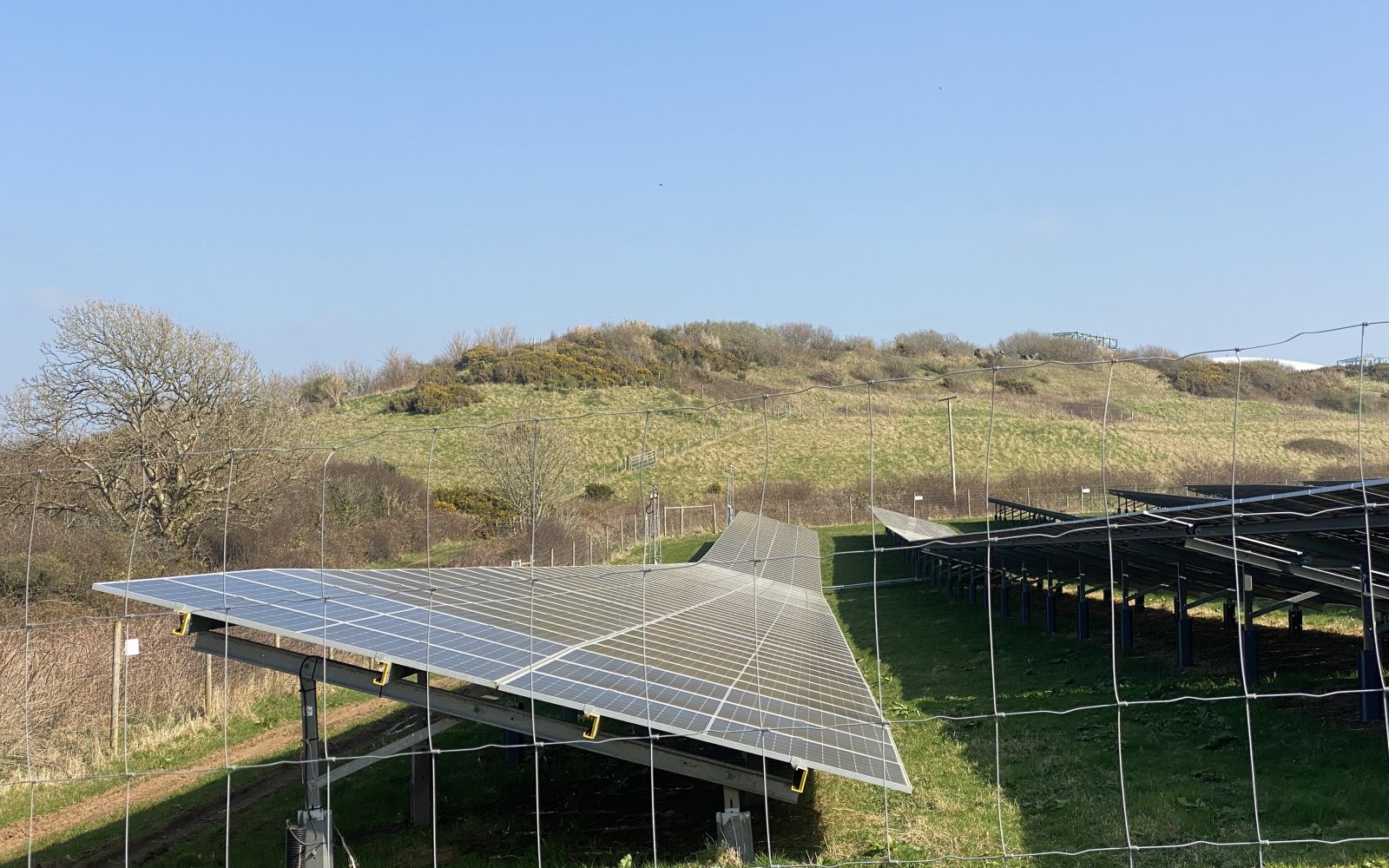

Elizabethtown College broke ground in October 2015 on what was set to become the largest solar installation on any college campus in Pennsylvania.
When complete, the 2.6-megawatt Elizabethtown College Solar Array was expected to produce more than 3 million kilowatt-hours a year, covering more than 20 percent of the college’s annual electricity needs. That is roughly enough power for nearly 300 homes.
A long-term commitment
“No other colleges or universities in Pennsylvania have made similar long-term commitments to solar power at this scale,” said Jay Carlis, vice president of Community Energy, the Pennsylvania-based solar developer that would own and operate the array. “That’s what makes this groundbreaking truly ground breaking.”
Under the agreement, Community Energy would operate the project for 20 years and Elizabethtown College would buy its power at a fixed price over that time. Arrangements like this let colleges add renewable energy without paying the full construction cost up front, while locking in predictable electricity prices.
The right use for the land
The array was planned for a field across Campus Road from the main campus, on land the college had owned for more than 45 years.
“Several times projects were proposed, however, none of them seemed an appropriate use of this land, until recently,” said college President Carl Strikwerda. “The idea of a solar array panel had been discussed in the past, but without the adequate funding, it wasn’t feasible.”
Funding and partners
The college won a $500,000 grant from the Pennsylvania Energy Development Authority through a competitive process. Strikwerda credited partnerships with the Stone House Group, PEDA and Community Energy with making the project possible.
Advanced Solar Industries of New Holland, Lancaster County, was hired to install the panels. “It’s a great day for Pennsylvania solar,” said Chris Byers, the company’s CEO and a former educator. Namaste Solar of Boulder, Colorado, was set to oversee the installation.
A classroom in a field
Faculty saw the project as more than a utility upgrade. The array was expected to give students hands-on learning opportunities in engineering, biology and business, from studying energy output to examining how the panels affect the land and how solar contracts are structured.
“While certainly benefiting the College with power savings, from a college president’s perspective, this project is a trifecta of sorts: it includes educational, environmental, and economic elements that will benefit our community and our students,” Strikwerda said.
Solar in Lancaster County
In 2015, large solar projects were still relatively rare in Lancaster County, where farmland preservation is a major priority. The Elizabethtown array was notable because it used college-owned land that had sat unused for decades rather than active farmland.
Local installers such as Advanced Solar Industries had been growing along with demand from farms, businesses and homeowners, and a project of this size gave them a high-profile example to point to. Supporters hoped it would encourage other colleges, school districts and institutions to consider long-term solar contracts.
Fixed-price power
Because the college agreed to buy the array’s output at a set price for two decades, it gained protection from swings in utility rates.
Why it mattered
Colleges are large energy users, with dorms, labs, dining halls and athletic facilities running year-round. Securing a fifth of its electricity from on-site solar at a fixed price gave Elizabethtown both cost stability and a visible commitment to sustainability, something students and prospective families increasingly ask about.
LititzDailyNews.com covered the groundbreaking with photos and video of dignitaries turning the first shovels of dirt and faculty examining one of the panels to be installed.
This story was originally reported by Lynn Rebuck for LititzDailyNews.com in October 2015 and has been updated for our archive.