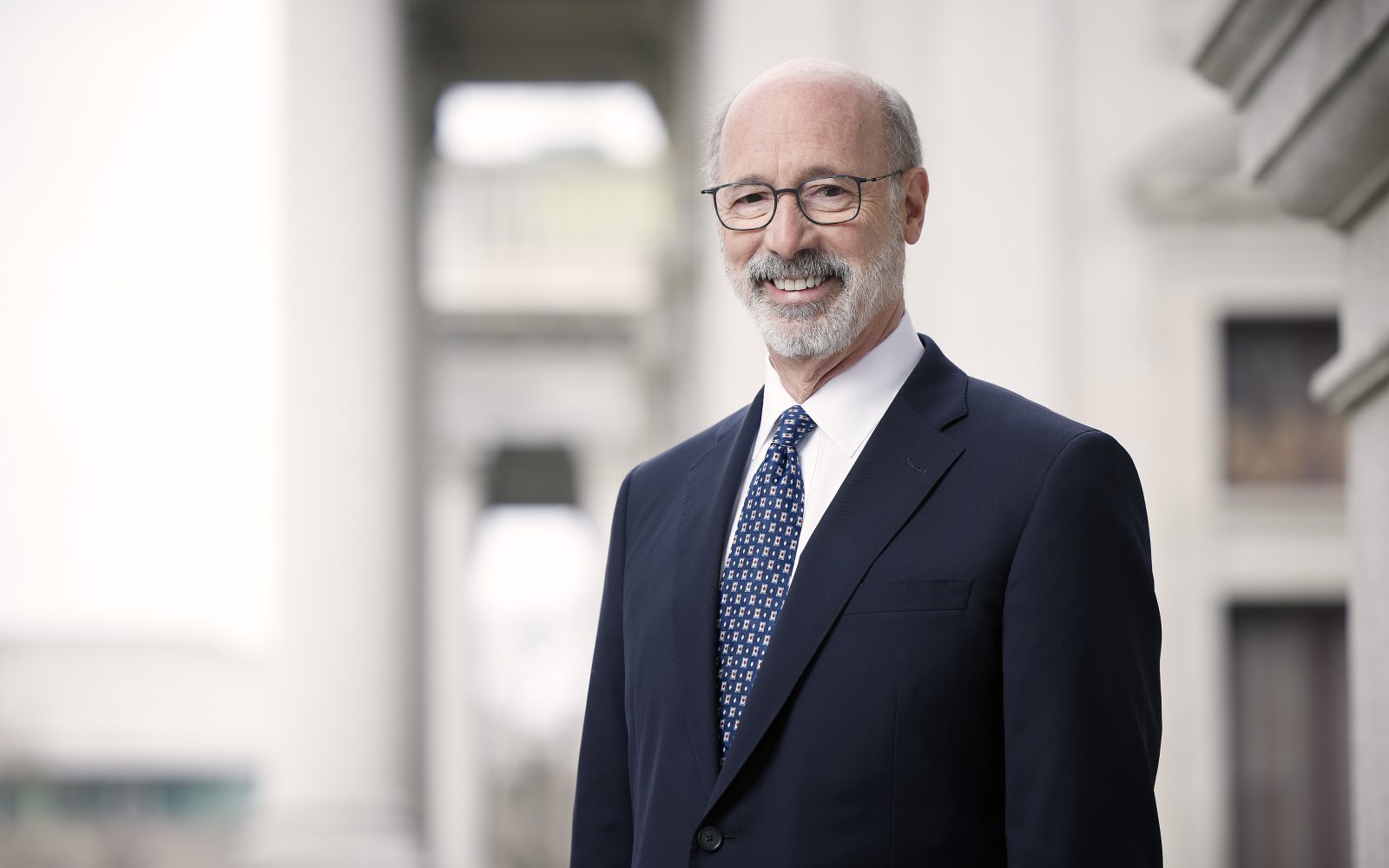

Tom Wolf became Pennsylvania’s 47th governor on January 20, 2015, taking the oath of office on a chilly day outside the State Capitol in Harrisburg. Within hours, the transition was playing out online as well.
A new official presence
By 2:18 p.m. on inauguration day, the governor’s new official Facebook page, listing him as a government official for the first time in his career, had 94 “likes.” The number kept climbing through the afternoon.
The York County Democrat had never before held elected office. He had served as state revenue secretary under Gov. Ed Rendell, an appointed position, before running his family’s kitchen cabinet distribution business and then launching his campaign for governor.
The new gubernatorial Facebook page started with just two posts and photographs.
Twitter doubles in minutes
Wolf’s new official Twitter account, @GovernorTomWolf, nearly doubled its followers in about 15 minutes that afternoon, jumping from roughly 900 to close to 1,800.
At the time, the account featured a single tweet, a line from his inaugural address:
“If we come together with a sense of shared purpose, we can build the better future PA deserves. Now, let’s get started.”
Wolf and his staff also continued posting photos and quotes from the inauguration on his campaign account, @WolfForPa.
Pa.gov changes hands
The transition was visible on the state’s official website, pa.gov, where the new governor’s official portrait greeted visitors that afternoon. No press releases had been posted yet.
A campaign built on social media
Wolf had made extensive use of social media during his 2014 campaign, pairing online outreach with a memorable television ad featuring him behind the wheel of his blue Jeep. The approach helped introduce a little-known businessman to voters across the state, first in a crowded Democratic primary and then in the general election, where he defeated incumbent Gov. Tom Corbett.
Corbett became the first Pennsylvania governor to lose a re-election bid since governors became eligible for consecutive terms.
Transitions in the social media age
The handoff of official accounts became a new feature of government transitions in the 2010s. Rather than inheriting a predecessor’s followers, many incoming officeholders launched fresh official accounts, while their campaign accounts remained separate under rules that keep campaign and government communication apart.
For residents, official accounts became a quick way to follow announcements on budgets, emergencies such as winter storms and road closures, and state programs.
What came next
Wolf’s first year in office was dominated by a long budget impasse with the Republican-controlled General Assembly over education funding and taxes, which left school districts across Pennsylvania, including those in Lancaster County, waiting months for state payments. Wolf was re-elected in 2018 and served two full terms, leaving office in January 2023.
Government on social media
By the mid-2010s, social media had become a major way for elected officials to communicate directly with the public. Official pages let governors and agencies share announcements, emergency information and updates on state programs without relying solely on news outlets.
That shift also raised questions about how official accounts should be managed, how they differ from campaign accounts and how comments from the public should be handled. Many states adopted policies separating official and political communication.
Staying informed
For residents, official state pages offer one more way to follow decisions that affect them, from road closures and weather emergencies to budget proposals. Many Pennsylvanians follow the governor’s office and agencies such as PennDOT for timely updates.
Reaching voters where they are
For many residents, a quick scroll through social media has replaced the evening news as a source of government updates.
This article was originally published in January 2015.