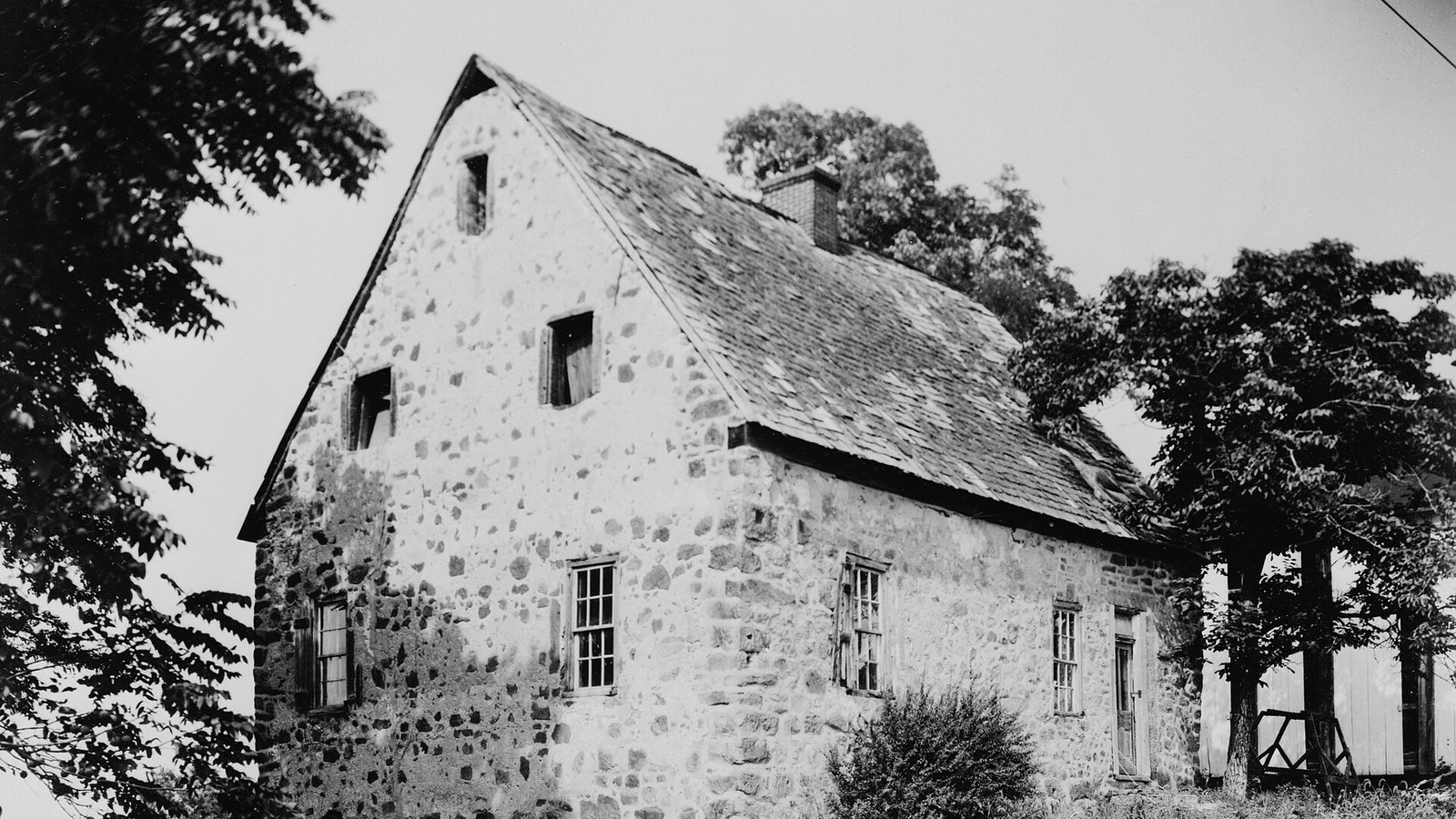

Hans Herr was a Mennonite bishop from Switzerland who led a group of Swiss Mennonite families to Pennsylvania in the early 1700s. Mennonites faced persecution in Europe, and William Penn’s colony offered religious freedom.
In 1710 the group bought land along Pequea Creek, in what is now southern Lancaster County. It was one of the first European settlements in the county.
The house
In 1719 Hans Herr’s son, Christian Herr, built a stone house on the property, in a medieval German style with a steep roof and small windows. It is considered the oldest surviving building in Lancaster County and the oldest Mennonite meetinghouse in North America, since services were held there.
The museum
The Hans Herr House is now a museum in Willow Street, run by the Lancaster Mennonite Historical Society. Visitors can tour the house and see a longhouse exhibit about the Native peoples who lived in the region before Europeans came, along with farm buildings and tools.
A wide family tree
Hans Herr’s descendants number in the thousands and are spread across the country, and the Herr name is common across Lancaster County. The house hosts events through the year, including a fall harvest celebration.