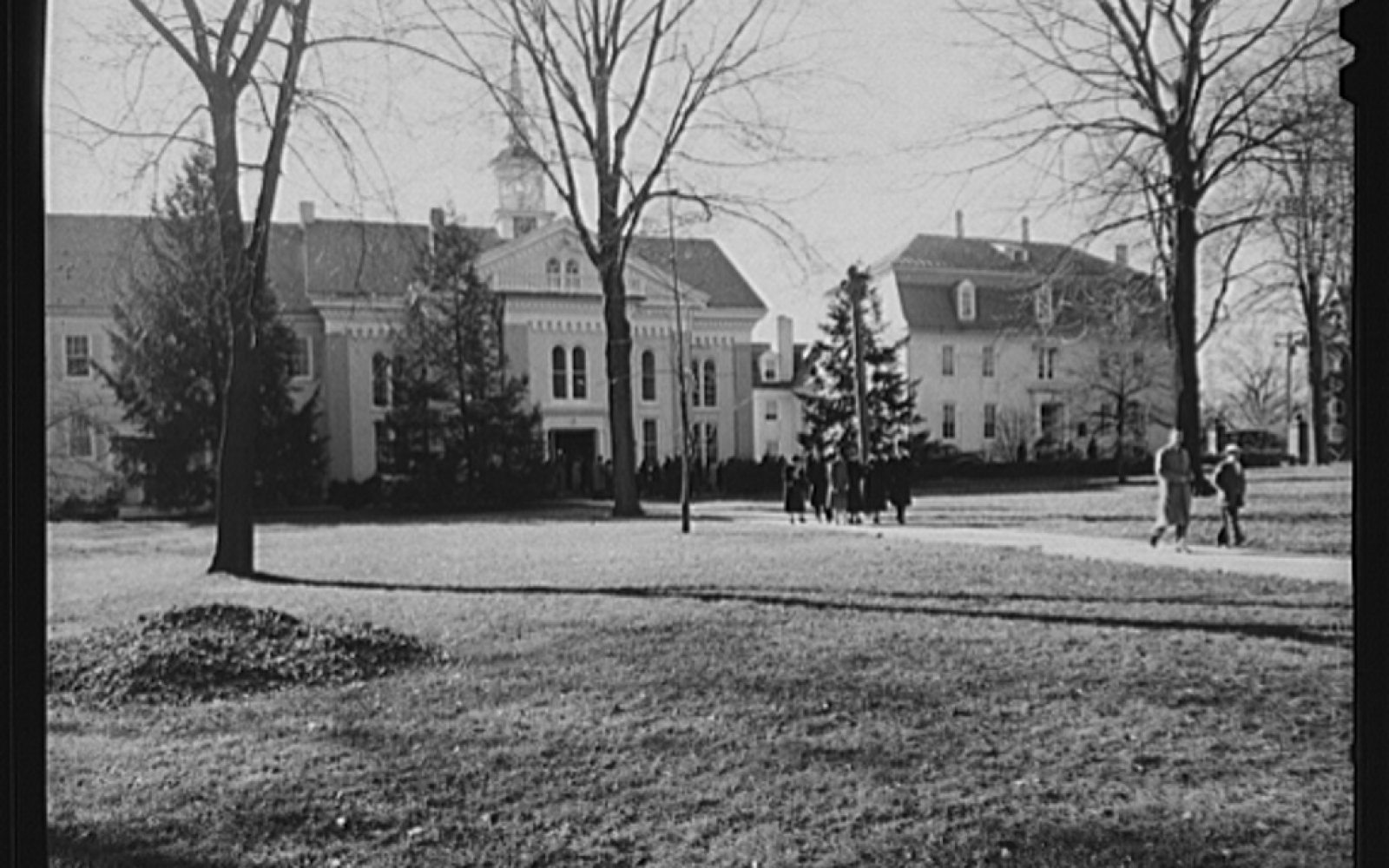

Candles dripped wax and lit up faces and song sheets on an unusually warm December night in 2015 as voices joined the bright tones of brass on Church Square in Lititz for the annual Carol Sing.
The free event, hosted by the Lititz Historical Foundation together with the Moravian Archives & Museum, is one of the town’s most cherished holiday traditions.
The Moravian Trombone Choir
At the center of the evening was the Moravian Trombone Choir, a musical institution of the Lititz Moravian Church whose tradition reaches back before the town itself was founded. Standing on the porch of the Moravian Archives & Museum, the musicians played a selection of hymns and Christmas carols while the crowd sang along. The choir even took requests.
Trombone choirs have long held a special place in Moravian life. In the church’s early communities, brass ensembles announced festivals, welcomed the seasons and even signaled deaths in the congregation, and the custom of brass music on holidays remains strong in Lititz today.
Dancing on the square
While the evening focused on singing together, at least one young attendee had come to dance. A 4-year-old girl turned, kicked and hopped in the open space between the musicians and the singers, turning the square into her own stage and drawing smiles from the crowd.
Her mother, who grew up in Lititz and once worked at Linden Hall, had traveled from Ohio with her two daughters to meet her sister for the evening.
“We live in Ohio now, and I was really excited to bring my daughters back here to experience a Lititz Christmas,” she said. “We had so much fun tonight.”
By the fire
After the singing, the Moravian Church opened its doors and invited everyone inside to warm up by a roaring fire and enjoy refreshments in the Fellowship Hall.
For some families, it was their first Carol Sing. Theresa Ratcliffe, a mother of seven from Lebanon County, learned about the event during a recent visit to the Johannes Mueller House across the street, the historic home that offered candlelit tours by costumed docents during the holiday season.
“I was talking about it for days afterwards,” said Ratcliffe, who found the home and its early artifacts “very interesting.”
“I wanted to come back and bring family,” she said, surrounded by several of her children, her sister from Lititz and her infant granddaughter. “We wouldn’t miss out on Christmas caroling.”
The Moravian Putz
Many guests then made their way to the church basement to see the Moravian Putz (pronounced “pootz”), a beloved holiday tradition. In a darkened room, visitors sat on risers as narration, music and lighting told the story of the proclamation and birth of Jesus across a moss-covered miniature landscape of the Holy Land, complete with figures of the Holy Family, shepherds, angels, kings and a sky full of stars.
The word comes from the German “putzen,” meaning to decorate or clean, and Moravian families have built these scenes for generations, often adding to them year after year.
After the presentation, children and adults were invited to view the display up close. Some reached out to touch it.
“It looks like it’s made out of candy,” one young visitor said, while a few of her friends quietly studied the scene from different angles.
A town that loves Christmas
Lititz’s Moravian roots shape much of how the town celebrates the holidays, from the trombone choir and the putz to the beeswax candles of the church’s Christmas Eve lovefeast. Events like the Carol Sing draw both longtime residents and visitors, many of whom come back year after year.
The putz remained on display throughout the 2015 holiday season for scheduled showings, arranged through the church office.
This article was originally published in December 2015.