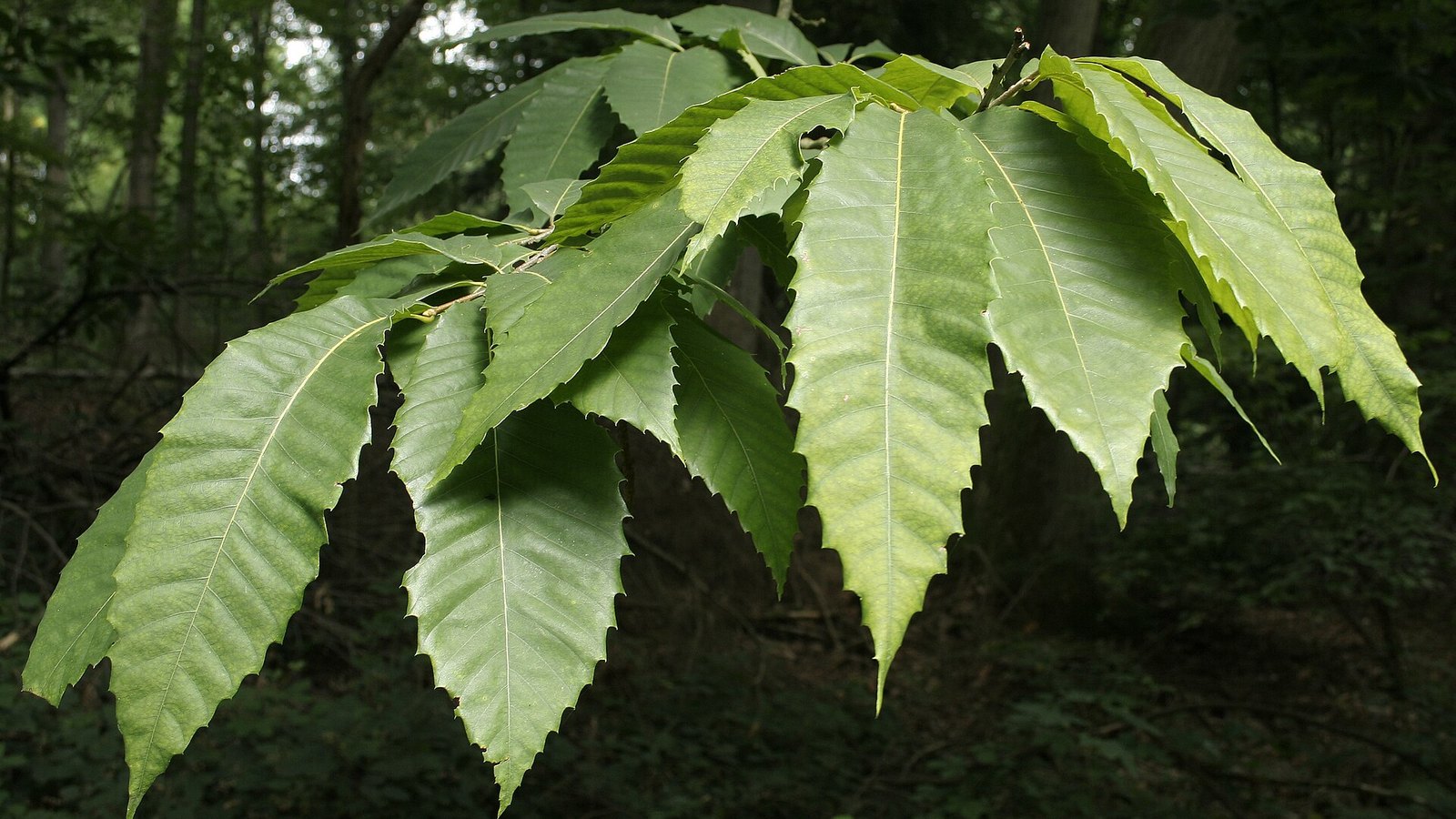

On a hill above Speedwell Forge Lake late last month, retired conservation officer Derek Pritts gave a group of Warwick High School students a short introduction over lunch. “We’re going to put some blight-tolerant American chestnut trees in the ground,” he told them, according to LNP | LancasterOnline. “This will be the first planting in Pennsylvania.”
The seedlings the students planted on Oct. 29 were Darling 54 American chestnuts, a genetically engineered line bred to tolerate the fungus that wiped out the species across its range a century ago. The Warwick School District marked the day in a Nov. 12 post on its website, headlined “High School Students Plant First Darling54 Seedlings in PA.”
What the students were planting
The American chestnut once made up a large share of the hardwood forests from Maine to Georgia, including Pennsylvania’s. In the early 1900s, chestnut blight, caused by the fungus Cryphonectria parasitica, began killing the trees, and within a few decades billions were gone. Chestnut roots often survive and send up sprouts, but those usually die back once the blight finds them.
The Darling line was developed at the State University of New York College of Environmental Science and Forestry in Syracuse. Researchers inserted a gene from wheat that produces an enzyme called oxalate oxidase, or OxO. The blight fungus attacks with oxalic acid, and the enzyme breaks that acid down, according to The American Chestnut Foundation.
The trees were long known as Darling 58. Researchers later found that the line being tested was actually a different one, Darling 54, and corrected the name in their federal filings.
Where the approvals stand
The tree’s path has not been simple. In December 2023, The American Chestnut Foundation withdrew its support for the SUNY-ESF project, citing field data that showed inconsistent blight resistance, slower growth and lower survival in some orchards, along with the mix-up over which line was being tested.
Since then, the U.S. Department of Agriculture’s Animal and Plant Health Inspection Service has concluded its review, finding Darling 54 unlikely to pose a greater plant pest risk than an ordinary American chestnut, the foundation says. A separate review by the Environmental Protection Agency, which regulates the OxO trait, was still pending according to the foundation’s latest update.
The ESF team said in its spring 2026 progress report that its own studies found Darling 54 trees grow slightly slower on average than non-engineered relatives, though the gap disappears on some sites, such as wooded areas likely to be targeted for restoration. The team expects the first wider distribution to take the form of expanded research plantings across the chestnut’s historic range, with help from citizen scientists.
A science class outdoors
For Warwick students, the planting was a lesson in forest ecology and in how long restoration takes. Chestnuts planted now will take years to flower, and their real test will come when blight reaches them. Pritts’s message to the students was that they were part of something that had not happened in the state before.
Speedwell Forge Lake, owned by the Pennsylvania Fish and Boat Commission, sits a few miles north of Lititz, and the slopes around it have long been used by local schools and anglers alike. The district has not said how many trees went into the ground or which classes took part.
It has been a busy fall for Warwick students outside the classroom. The district’s middle and high school fall plays run this weekend, as we reported, and the high school’s October honors were announced this week.